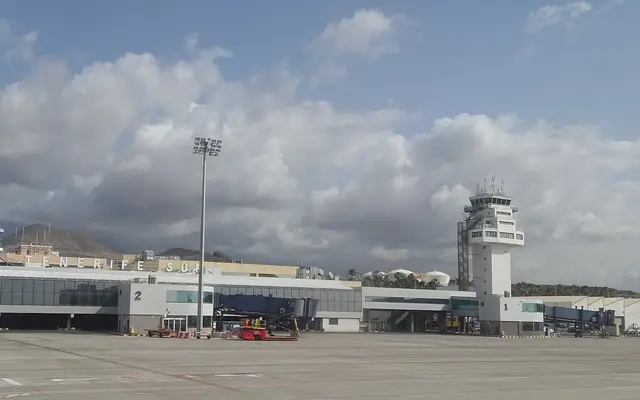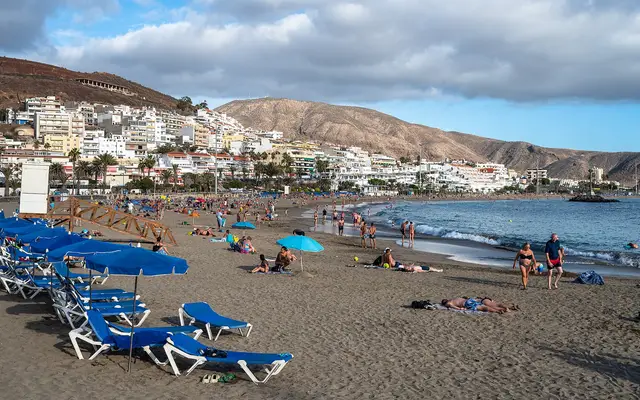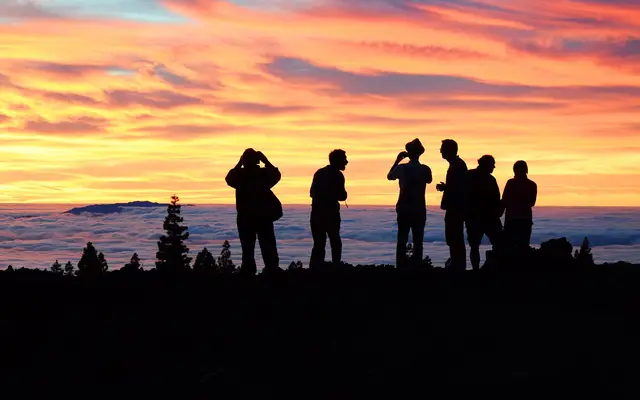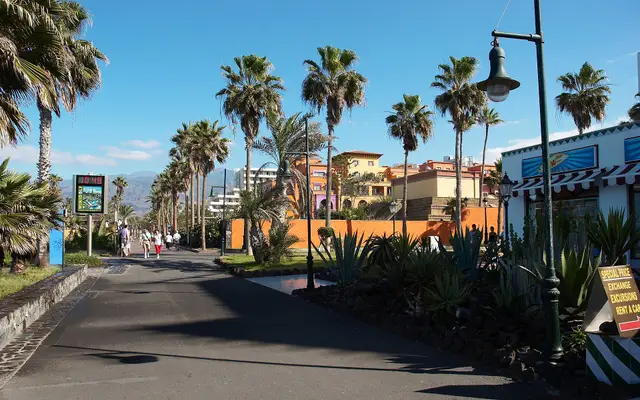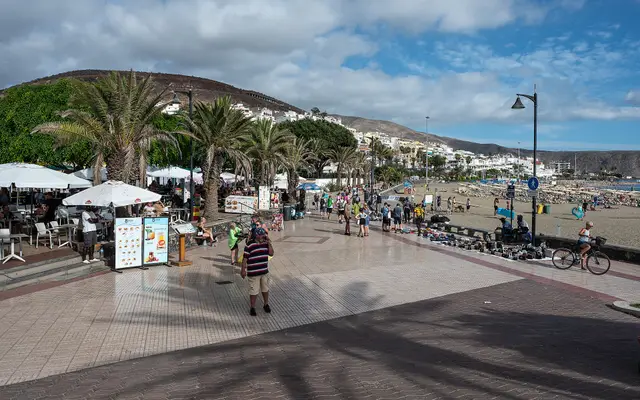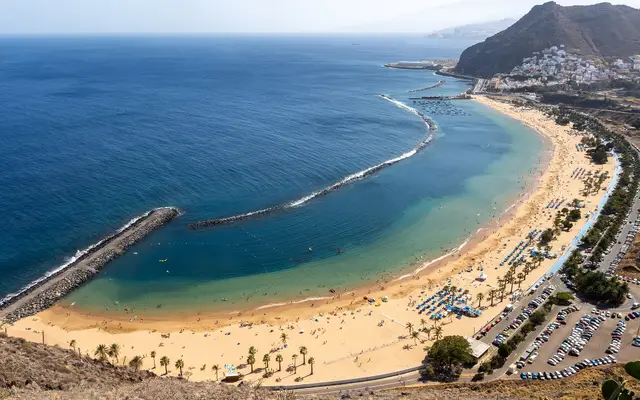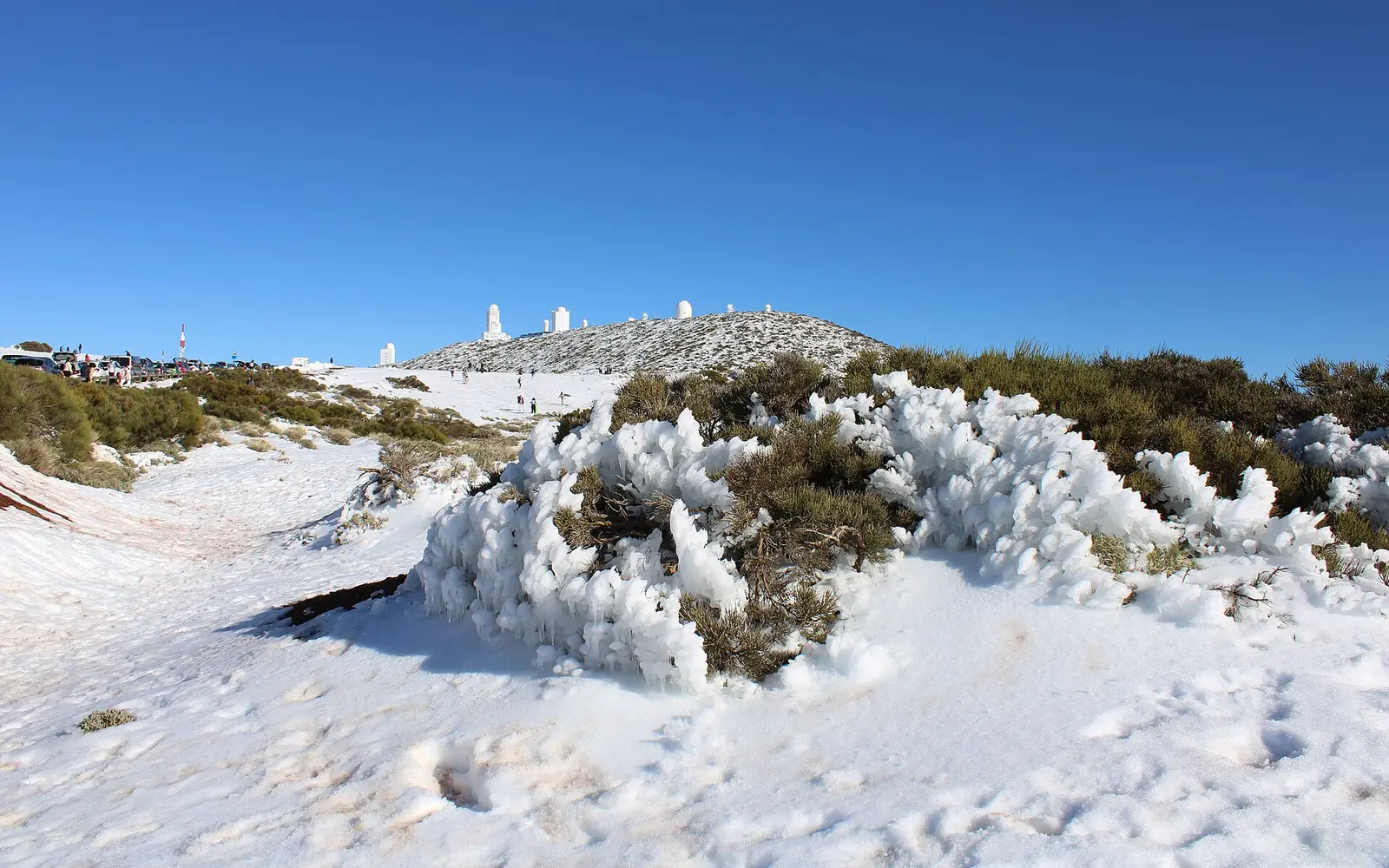
There's no bad month to go to Tenerife, but there are better months for each thing. For the beach, think about the water more than the air: the sea is coldest in March and warmest in late September and October, not August. For the north, think about the clouds: La Laguna gets rain on about 64 days a year, the airport in the south on about 15. A grey morning in Puerto de la Cruz is usually a sunny morning in Los Cristianos, less than an hour and a half away by car.
| Jan | Feb | Mar | Apr | May | Jun | Jul | Aug | Sep | Oct | Nov | Dec | |
|---|---|---|---|---|---|---|---|---|---|---|---|---|
| South coast | ||||||||||||
| Air max °C | 21.7 | 22 | 23.1 | 23.1 | 23.9 | 25.4 | 27.7 | 28.4 | 27.9 | 26.8 | 24.8 | 22.8 |
| Sea °C | 20.2 | 19.4 | 19.3 | 19.6 | 20.2 | 21.2 | 22.1 | 22.9 | 23.7 | 23.6 | 22.3 | 20.9 |
| Rainy days | 1.8 | 2.2 | 1.9 | 1.1 | 0.3 | 0 | 0 | 0.2 | 0.6 | 1.6 | 1.9 | 3.5 |
| North coast | ||||||||||||
| Air max °C | 21 | 21.2 | 22.1 | 22.7 | 24.1 | 26.2 | 28.7 | 29 | 28.1 | 26.3 | 24.1 | 22.1 |
| Rainy days | 4.2 | 3.8 | 3.8 | 2.4 | 0.9 | 0.2 | 0 | 0.3 | 0.9 | 3.1 | 4.7 | 5.4 |
| Teide (2,400 m) | ||||||||||||
| Air max °C | 7.5 | 8 | 10.2 | 11.8 | 14.5 | 18.9 | 23 | 22.6 | 18.6 | 14.3 | 11.1 | 8.8 |
| Rainy days | 4.5 | 4 | 4.1 | 2.7 | 1.1 | 0.2 | 0.1 | 0.5 | 1.6 | 3.7 | 4.4 | 5.6 |
Source: AEMET, valores climatológicos normales 1981–2010 (Tenerife Sur Aeropuerto, Santa Cruz de Tenerife, Izaña); mar: seatemperature.org
| Jan | Feb | Mar | Apr | May | Jun | Jul | Aug | Sep | Oct | Nov | Dec | |
|---|---|---|---|---|---|---|---|---|---|---|---|---|
| Warm sea for swimming | unlikely | unlikely | unlikely | unlikely | unlikely | likely | likely | ideal | ideal | ideal | likely | unlikely |
| Little rain in the high north | unlikely | unlikely | unlikely | unlikely | likely | ideal | ideal | ideal | ideal | unlikely | unlikely | unlikely |
| Snow possible on Teide | likely | likely | likely | unlikely | unlikely | no | no | no | no | unlikely | unlikely | likely |
| Surf at Las Américas | ideal | ideal | ideal | unlikely | unlikely | unlikely | unlikely | unlikely | unlikely | ideal | ideal | ideal |
| Santa Cruz Carnival | unlikely | ideal | likely | no | no | no | no | no | no | no | no | no |
| Romerías (pilgrimage fiestas) | unlikely | unlikely | unlikely | unlikely | ideal | ideal | ideal | ideal | unlikely | unlikely | unlikely | no |
| Resident pilot whales and dolphins | ideal | ideal | ideal | ideal | ideal | ideal | ideal | ideal | ideal | ideal | ideal | ideal |
unlikelylikelyideal
Tenerife in winter: November to March
On the south coast, average highs are between 22 and 25 °C and it rains on one to four days a month. The downside is the calima, Saharan dust carried on the east wind: it turns the sky yellowish, worsens air quality and usually sends the temperature up suddenly. It's most common from December to March.
November
Highs of about 25 °C in the south and the sea still at about 22 °C: a good beach month. In the north the clouds return, with about 8 days of rain in La Laguna. Puerto de la Cruz and Icod celebrate San Andrés, and in Playa de las Américas the wave season for surfing continues, from October to March.
December
The wettest month in the south, and even so that's about 3.5 days. Highs of 23 °C on the coast; on Teide, at Izaña, the average high is 9 °C and the average low is around 2 °C. The Geminids arrive in mid-month: check the phase of the moon before you go up to watch them.
January
The coolest month on the coast, with highs of about 22 °C and lows of 15 °C. At Izaña the average low is around 1 °C and there's snow on about two days a month. It's romería season in the south, with Arona and Adeje in the second half of the month, and the Carnival galas and competitions begin, held indoors. In Santiago del Teide the almond trees blossom in late January and in February.
February
Just as mild as January, and with the Santa Cruz Carnival out on the streets in most years (we explain how the dates are worked out below). It's the month with the most snow days on Teide, about 2.5 on average.
March
More hours of sunshine than the previous months (226 a month in the south) and the coldest sea of the year, about 19 °C. It's the worst month for sea swimming, even with the air at 23 °C. In some years Carnival runs into the first week.
Spring: April to June
April
Highs of 23 °C, barely a day of rain in the south and the water still at about 19.5 °C: you can swim, but it's on the chilly side. In Easter week, Arona opens adapted bathing at Playa de Los Cristianos and Las Galletas. On Teide, snow is now rare.
May
One of the most balanced months: 24 °C, almost no rain on either coast and the sea warming to 20 °C. The main romería season begins: pilgrimage fiestas with traditional dress, decorated carts, food and music.
June
The month of the carpets: in La Orotava, on the Thursday of the Corpus Christi octave (a week after Corpus Christi), the streets are covered in flowers and the town hall square in a tapestry of volcanic sand from Teide, a tradition dating back to 1847. The following Sunday is the Romería de San Isidro. On the night of 23–24 June there are San Juan bonfires on the beaches of Puerto de la Cruz. And the Siam Night season starts, Siam Park's evening opening: the last one ran from late June to late August, and each summer's dates are published on siampark.net.
Summer: July and August
July
Highs of 28 °C in the south and nearly 300 hours of sunshine, and the north at its best: La Laguna only gets a couple of days of rain. The cable car extends its hours (last ascent at 17:40 until September) and it's the most popular time for kitesurfing in El Médano. Watch out for heatwaves: when there's a fire-risk alert, the Cabildo (island council) closes the forests and quad routes on forest tracks are cancelled.
August
The hottest month, with an average high of 28.4 °C in the south and the water finally at about 23 °C. The Perseids arrive in mid-month: a good night for Teide after dark if the moon doesn't get in the way.
Autumn: Tenerife in September and October
September
The water reaches its peak, about 23.7 °C, and the air is still at 28 °C. 14 September is the feast of the Cristo de La Laguna. Assisted bathing at Playa de Los Cristianos ends on 15 September (at Las Vistas it carries on all year).
October
For many people, the best month: the sea is still at about 23.5 °C, the air at 27 °C and there are far fewer families than in August. The south gets a couple of days of rain; in the north, the clouds come back. The winter waves start at Las Américas.
Santa Cruz Carnival: how the dates fall
The Santa Cruz de Tenerife Carnival has been a Festival of International Tourist Interest since 1981. It has two parts. In January and February the galas and competitions (murgas, comparsas and other categories) take place indoors. The street carnival is a block of about ten days, worked out from Ash Wednesday:
- The Wednesday of the week before: the Queen's Gala.
- The Friday: the Cabalgata Anunciadora, the opening parade.
- Shrove Tuesday: the Coso Apoteosis, the grand parade.
- Ash Wednesday: the Burial of the Sardine.
- The following weekend: the "Piñata", which closes the festivities.
Because Ash Wednesday depends on Easter, the street carnival usually falls between February and early March. Find that year's Ash Wednesday and count back to get an idea of the dates.
For Carnival, stay in Santa Cruz or in La Laguna, 15 minutes away by bus: getting back to the south in the small hours is a long trip.
The sea and Teide through the seasons
The sea. The water is the same temperature in the north and the south; what changes is the swell. The south's beaches with breakwaters (Las Vistas, El Camisón, Torviscas) are calm all year round. Pilot whales and dolphins live off Adeje all year, so whale watching has no season.
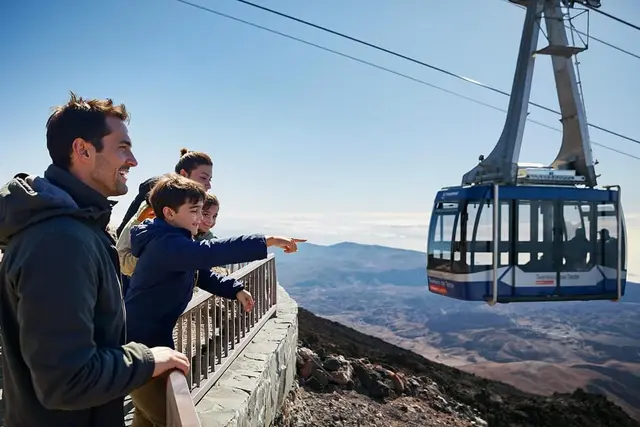
Teide in winter. At Izaña, at 2,369 m, January highs are around 7.5 °C and lows around 1 °C; higher up, at 3,555 m, it's colder. With snow or ice the Cabildo can close roads or ban quads and buggies, and the cable car decides each morning whether to open: it announces this at around 08:30 and, if it closes, changes or refunds your ticket free of charge. In winter the last ascent is at 16:00; the day's conditions, with webcams, are on volcanoteide.com. By bus (342 from the south, 348 from Puerto de la Cruz) you get about five hours at the top. Everything is in Teide.
| Platform | Product | Rating | Price | Where to book |
|---|---|---|---|---|
| GetYourGuide | Tenerife: Mount Teide Tour with Cable Car Ticket & Transfer | 4.3 (6,095) | €92 | See on GetYourGuide |
| Tiqets | Mount Teide: Tour with Cable Car | 4.2 (48) | €92 | See on Tiqets |
| Headout | Mount Teide Guided Tour with Transfers & Cable Car Tickets | — | €92 | See on Headout |
| Official site | Volcano Teide, tour with cable car and transfer | — | €92 | Official website ↗ |
Adult prices checked on 2 October 2026. They can change with the date; each platform confirms the final price.
Volcano Teide sells its tour with the cable car and transfer for €92, the same price as on every platform. In winter, with a higher risk of closure due to wind or ice, look closely at the cancellation terms: on Tiqets and Headout it's free up to 24 hours before.
High season, low season and rainy days
There's no official high and low season calendar: flights and hotels set prices according to your dates, so compare them for your days. At the attractions, what changes with the season is the opening hours (shorter in winter at the cable car, Siam Park and Aqualand) and some services, such as Siam Night or the summer adapted bathing.
Things to do in Tenerife when it rains. First, switch coasts: rain and cloud tend to stay in the north, and the south is often still sunny. If the rain catches you in Santa Cruz, TEA (the Tenerife Espacio de las Artes gallery) is free and opens Tuesday to Sunday until 20:00, and on Friday and Saturday afternoons several of the Cabildo's museums don't charge admission; see museums. The submarine and the parks also run under cloud, although Siam Park and Aqualand don't refund your ticket if they close because of bad weather.
Book for the season
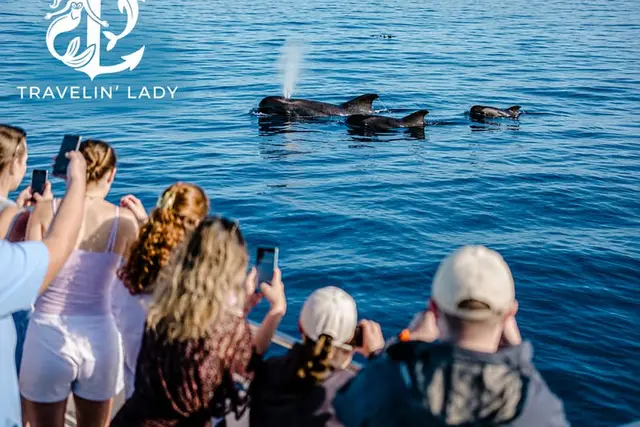
GetYourGuide1.5 hours
Travelin' Lady: Eco Yacht Whale & Dolphin Safari + Swim
4.7 (19,421 reviews)
from €29.90Check availability
GetYourGuide7 hours
Tenerife: Mount Teide Tour with Cable Car Ticket & Transfer
4.3 (6,095 reviews)
from €92Check availability

GetYourGuide3 - 5 hours
Tenerife: Sunset and Stargazing at Teide National Park
4.7 (3,665 reviews)
from €35Check availability


GetYourGuide2 hours
Tenerife: Surfing Lesson for All Levels, Photos included
4.8 (1,646 reviews)
from €42Check availability

GetYourGuide7 hours
Anaga Mountains & Enchanted Forest, Tenerife Hiking Tour
5.0 (443 reviews)
from €139Check availability
See all options on GetYourGuide →
What's the best month to go to Tenerife?
It depends on what you want. For swimming, September and October, with the sea at about 23.5 °C and fewer families than in August. For gentle sunshine without the heat, November to April in the south, with highs of 22 to 25 °C.
What's the weather like in Tenerife in November?
On the south coast, highs of about 25 °C, lows of 18 °C and the sea at about 22 °C, with a couple of days of rain. In the north and in La Laguna there's more cloud and about 8 days of rain.
When is the Tenerife Carnival?
The Santa Cruz Carnival takes to the streets for about ten days around Ash Wednesday, usually between February and early March. Some editions are scheduled later than usual, so confirm the dates in the city council's official programme before booking.
Does it snow on Teide?
Yes, in winter. At Izaña, at 2,369 m, it snows on two or three days a month on average from December to March, and the cable car and roads can close because of ice or wind.
When is low season in Tenerife?
There's no official low season: the climate allows year-round visits, and prices depend on each hotel and airline. If you want fewer crowds and a warm sea, October and November are a good bet.